In the Midwest, the natural rhythm of country club life has traditionally been dictated by the thermometer. When the greens are lush, the club is the heartbeat of the community; however, as the first frost settles, many facilities face the challenge of maintaining that same energy. While golf remains a central pillar, a club’s value proposition shouldn't hibernate for five months of the year.
At Charles Vincent George Architects, we have spent decades partnering with clubs to solve this seasonal puzzle. Our approach is grounded in the reality of club operations: any year-round solution must be creative, adaptive, and mindful of staffing logistics. By viewing the club campus as a versatile landscape rather than a collection of single-use zones, we help boards develop architectural strategies that keep members engaged from the height of July to the depths of January.
To maintain steady revenue and member interest throughout the year, many clubs are shifting toward a "winter campus" model. The most effective way to do this without ballooning overhead is to leverage existing infrastructure. By clustering winter activities in and around otherwise summer-focused areas, we minimize the need for entirely new, isolated buildings when possible.
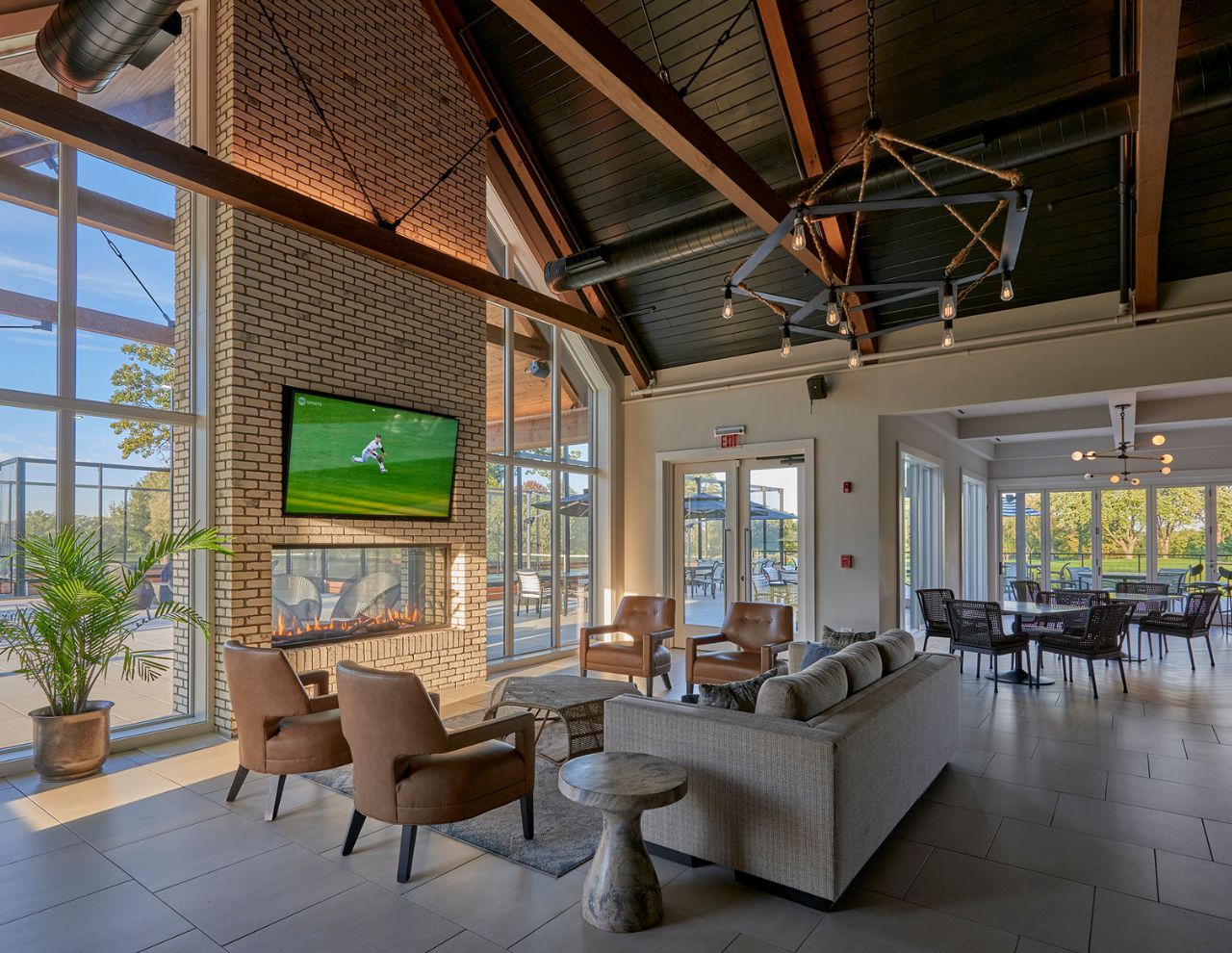
At River Forest Country Club, we designed an addition to the pool facility that serves as a masterclass in this philosophy. Instead of the pool area becoming a ghost town in October, it now serves as a vibrant winter social hub. We integrated a bar and lounge space featuring a fireplace and 2 new indoor golf simulators directly adjacent to the social area. This layout allows the club to maintain a consolidated footprint, making it easier for staff to provide high-quality food and beverage service while members transition from a simulated round of golf to a warm drink by the fire.
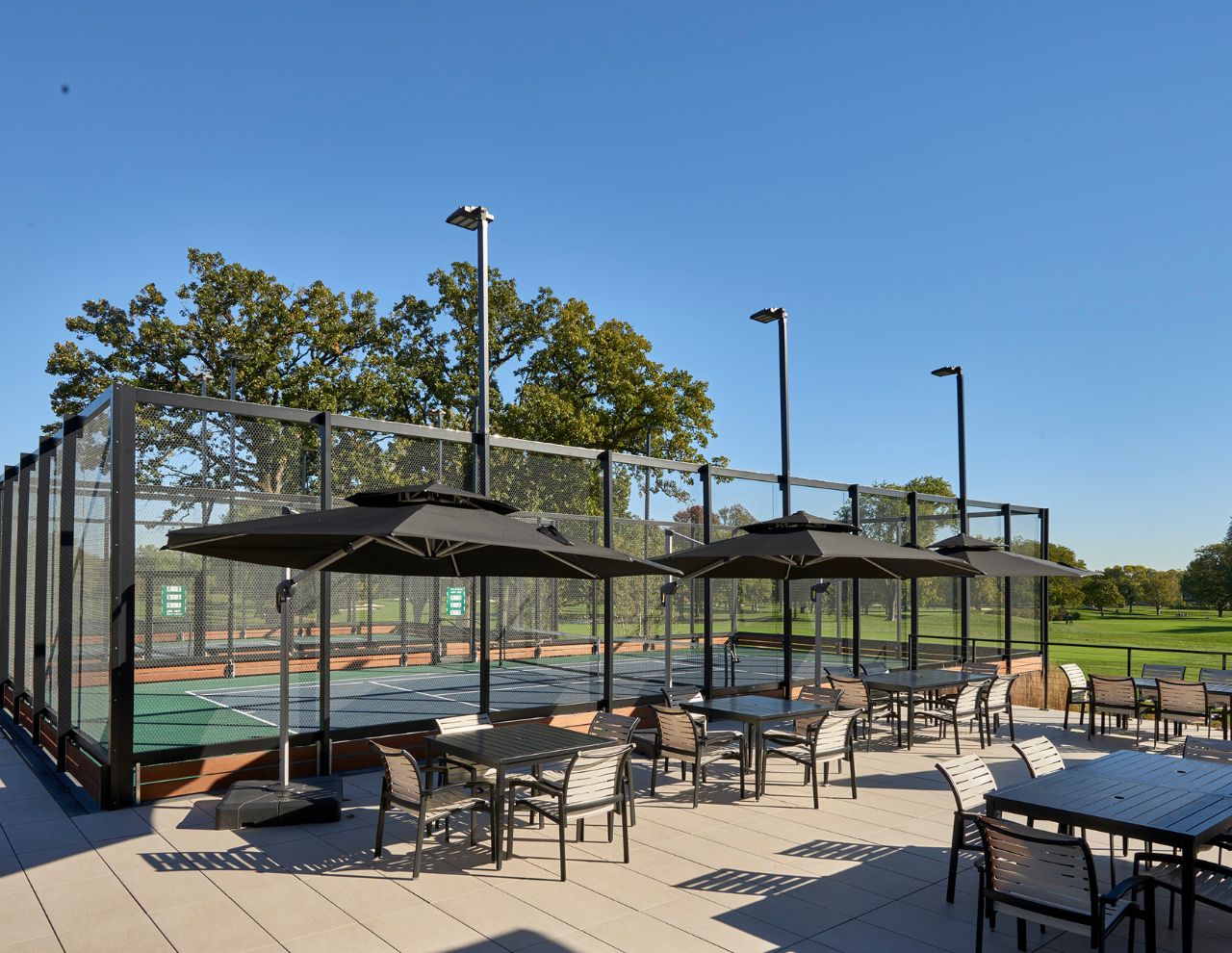
One of the most successful ways to drive winter engagement is by leaning into sports specifically designed for colder climates. Paddle tennis has become a premier choice for Midwestern clubs. These courts, which are larger than pickleball and feature 10-foot screen walls, allow for a dynamic style of play that combines elements of tennis and racquetball.
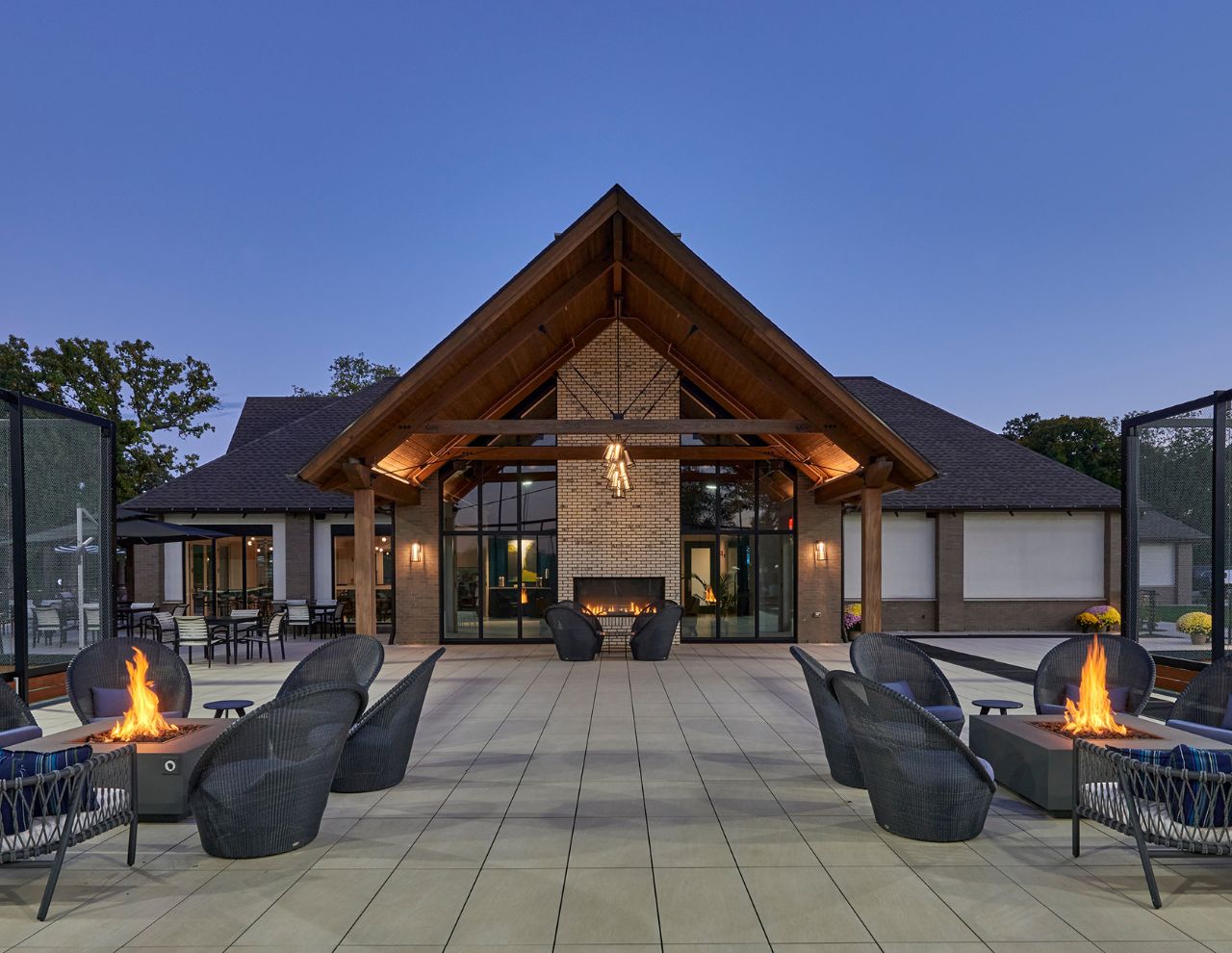
For the paddle tennis court installation at River Forest Country Club, we focused on the spectator experience as much as the sport itself. We designed warming facilities with large glass walls, allowing members to enjoy the action from a comfortable, heated lounge. To ensure the courts remain playable regardless of the forecast, integrated heaters melt snow and ice with the flip of a switch. By surrounding these courts with outdoor fire pits and year-round kitchen access, the club transforms a dormant outdoor space into a high-energy destination.
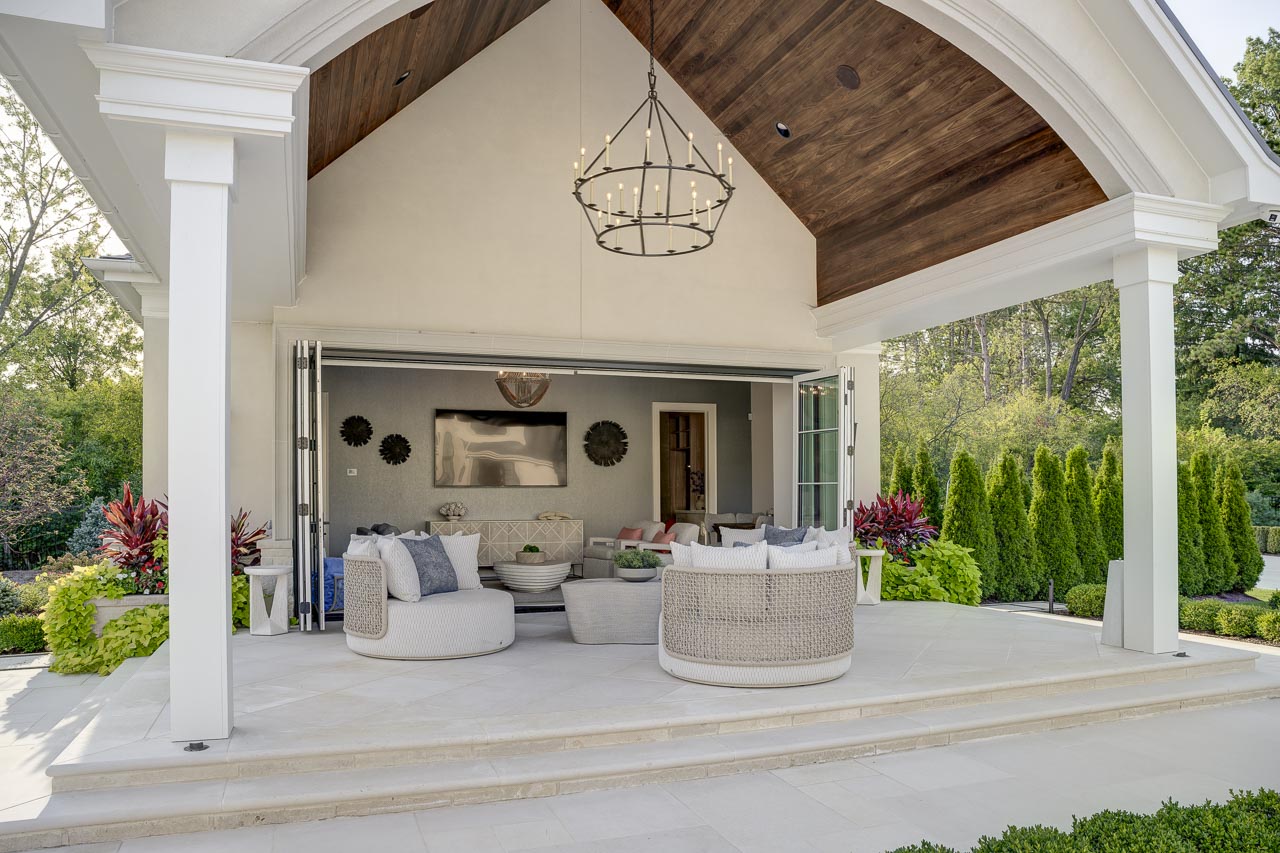
Flexibility in architecture is paramount for country clubs and often comes down to the ability to "right-size" a space based on the season. Large, open-air pavilions are wonderful in June but can feel cavernous and cold in December. We utilize moveable glass walls to give clubs the power to section off areas, creating intimate, climate-controlled environments without sacrificing the view of the grounds.
This adaptability is crucial for managing staffing and utility costs. If a space can be easily closed off when not in use, the club avoids the expense of heating underutilized square footage. Conversely, when a large event occurs, these walls can be retracted to reintegrate the space into the larger floor plan.
A beautiful winter space is only successful if the club can afford to staff it. Architecture plays a direct role in operational efficiency. We look for ways to create multi-functional service points that work for different departments depending on the time of year.
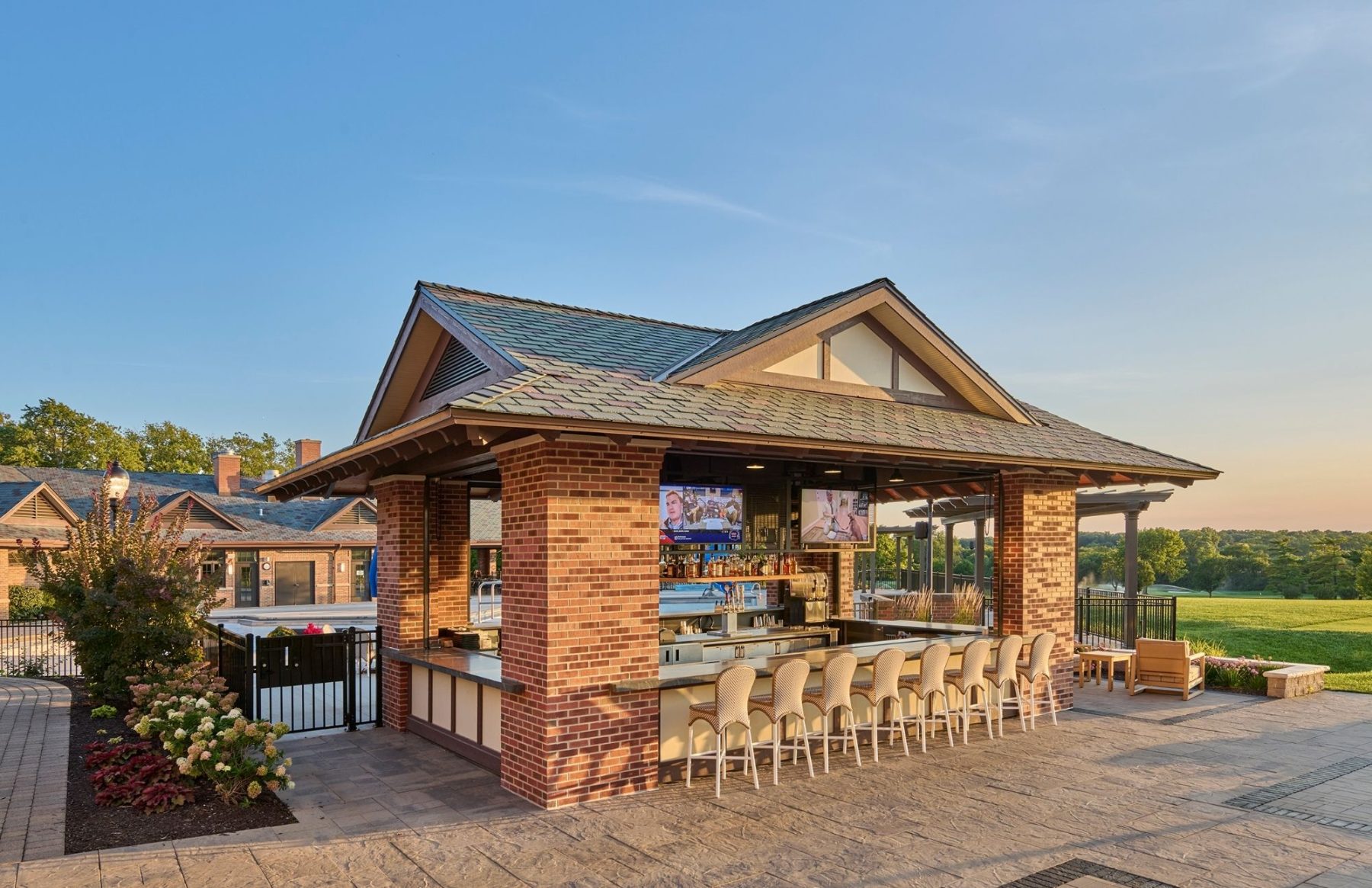
At Edgewood Valley Country Club, we designed an outdoor cabana that sits precisely at the juncture of the pool and the outdoor dining spaces. This design creates a transitional space that allows a single service team to manage two distinct areas. One side serves the fenced-off pool area, while the other side features pull-up seating for the patio dining area. This judicious use of space ensures that whether it is a busy pool day or a quiet autumn evening in the outdoor dining area, the club’s footprint remains manageable and efficient.
True architectural success in the country club sector is measured by the members’ desire to visit even when their golf clubs are tucked away in the bag. Our goal is to create a seamless transition between seasons by prioritizing versatile social hubs and smart spatial adjacencies. Through authentic, durable design, CVG ensures that the club remains the center of their members’ social lives 12 months a year.