The impact of COVID-19 on society has been profound across many aspects of our lives. During these last several months, most retailers have been challenged to come up with solutions to both survive the shutdowns and navigate the strict protocols and logistics involved with slowly reopening their stores.
It was interesting to revisit this piece we authored only four months ago that explored the evolution of bricks and mortar retailers, how retailers are continuously evolving with the growth of eCommerce, and the role design can play in supporting their ever-changing needs. The ongoing pandemic presents additional burdens for bricks and mortar businesses to meet their customers’ needs (safety, sanitation, supply chains, curbside pick-up, etc.). We are confident the retailers that will flourish, in spite of current circumstances, are those that excel at finding unique ways to continue interpreting broader trends, while also embracing flexibility to respond to in-the-moment challenges (just as they have done while evolving in response to eCommerce). We believe the perspectives shared in our original February 2020 article below are still pertinent in light of today's circumstances and the highly competitive retail landscape.
Predictions of doom and gloom for the bricks and mortar retail sector have been echoing, if not reverberating, for years now. What better time than the start of a new year – and a new decade – to challenge some of the hype around this topic and determine which, if any, predictions are truly manifesting?
Retail store operators and their providers – from product manufacturers and landlords to architects and merchandising experts – each have a unique perspective on the reality of the situation. As retail sector architects, besides keeping up with the latest forecasts, we’re constantly examining the health of the market through the lens of our own project experience. In this article, we’re excited to share the top three positive trends we’re seeing in spite of – or because of eCommerce – as part of a discussion on the actual impact that eCommerce is having on bricks and mortar retail.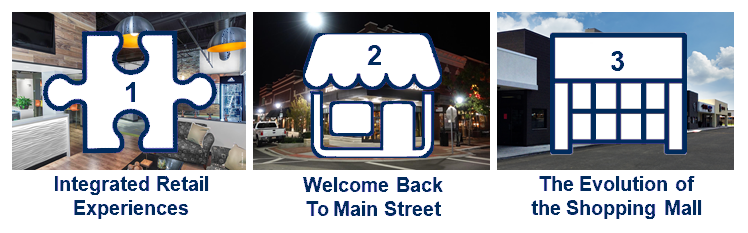
Over the last decade, online retail (or eCommerce) has steadily emerged as a convenient option and growing alternative for consumers; but it, surprisingly, still only accounts for approximately 12% of total retail sales in the United States, falling short of some predictions that over 14% of U.S. retail consumption would be happening online by year 2020. Recognizing that eCommerce will continue to grow, there is definitely still hope for physical retail stores.
A significant driver for bricks and mortar success – according to bigcommerce.com – eCommerce experiences are bleeding over to offline, in-store shopping interactions, causing retailers to ‘up their game,’ with high-quality, integrated, and highly interactive offline experiences. Supporting this observation, a 2018 report by JLL and Big Red Rooster published the results of a survey that asked 2,000 shoppers to evaluate 20 top retailers, and proposed “Six Dimensions of Retail Experience” – shopper ‘must-haves,’ if you will – that include to-be-expected criteria such as Intuitive, Human, Meaningful, and Personalized; but, also on the list: Immersive and Accessible. The survey found that shoppers are drawn to unique and attractive stores – both exterior and interior environments that are appealing and captivating. As well, shoppers crave a seamless experience that allows them to shop where and when they want – be it in-store, via mobile apps, or on a website – or all three at the same time! Strategic real estate decisions and thoughtful, integrated design of physical retail environments, with special attention to technology, can play distinct roles in bridging the gap between today’s retailers and what their customers expect in the digital economy.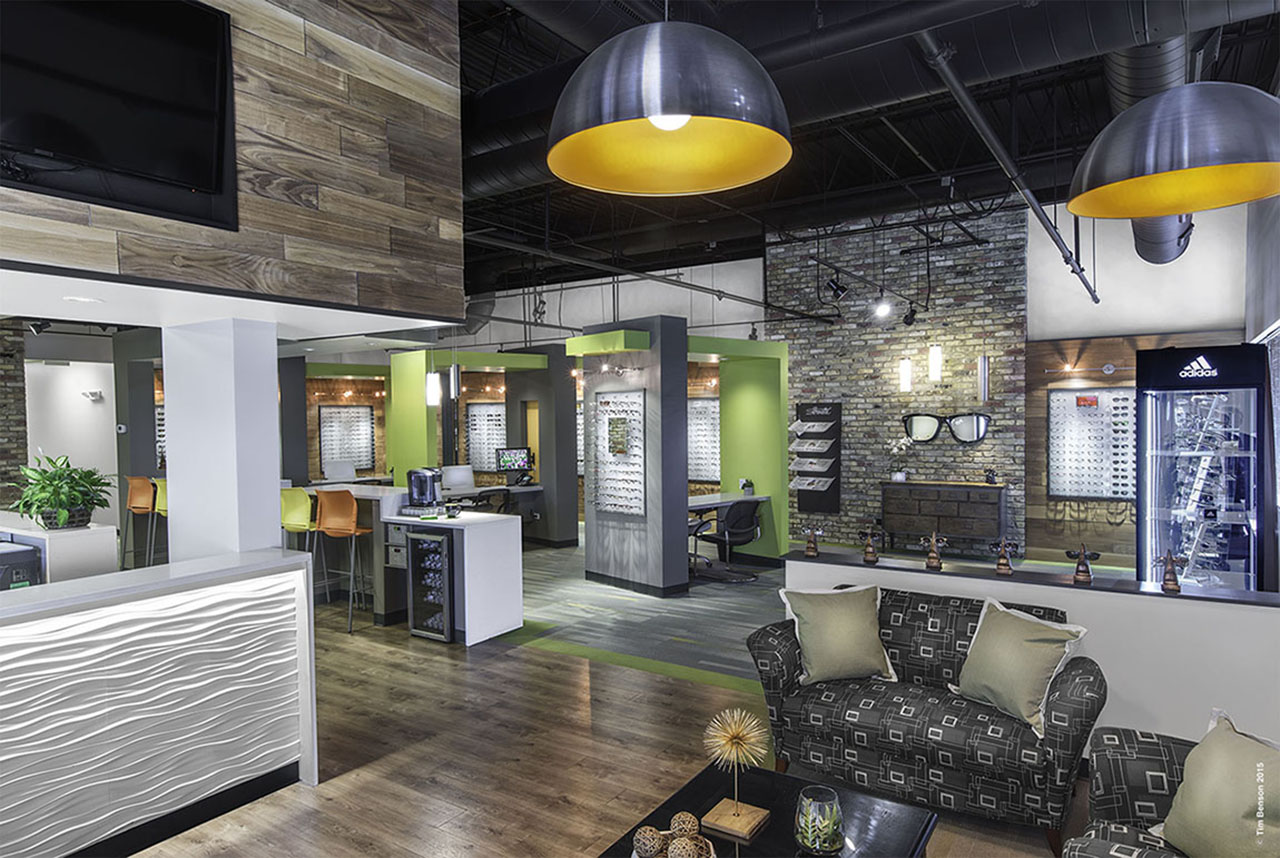
Project Profile: Midwest Eye Clinic
In Downers Grove, Midwest Eye Clinic was designed by CVG Architects with customer appeal as a central tenet. Exposed brick, a bold color scheme, and an open, loft-like design together provide visual interest and a unique experience for staff and customers alike. The space – which is part retail store, part optometrist’s office – has a residential feel with a variety of settings and seating options. The client specifically understood the need for customers to stay connected through technology during their visit; so, a data and recharging bar were integrated into the plan. Adding to this, Midwest Eye Clinic is actively engaging with customers on social media using quirky posts that play on memorable references to popular movie posters and album covers. Customers enjoy responding online and many have come up with ideas or even props for the staff to use on future promotions, thereby extending the online experience to in-person interactions.
Just as bricks and mortar stores are taking cues from eCommerce, eCommerce is taking cues from the experience that only a physical retail store can provide. A recent FastCompany article suggests that “the retail store of the future will actually take us back to the past, when shopping was something we did locally, in our own communities.” The growing trend of leading brands in eCommerce (who have never had bricks and mortar locations) deciding to develop physical “storefronts” to complement their online presence has resulted in unexpected ‘town center’ and ‘main street’ revitalization opportunities across the country. eCommerce leaders are finding that the move to add a physical presence to their online identity responds to consumer expectations for convenience, while also providing a community amenity.
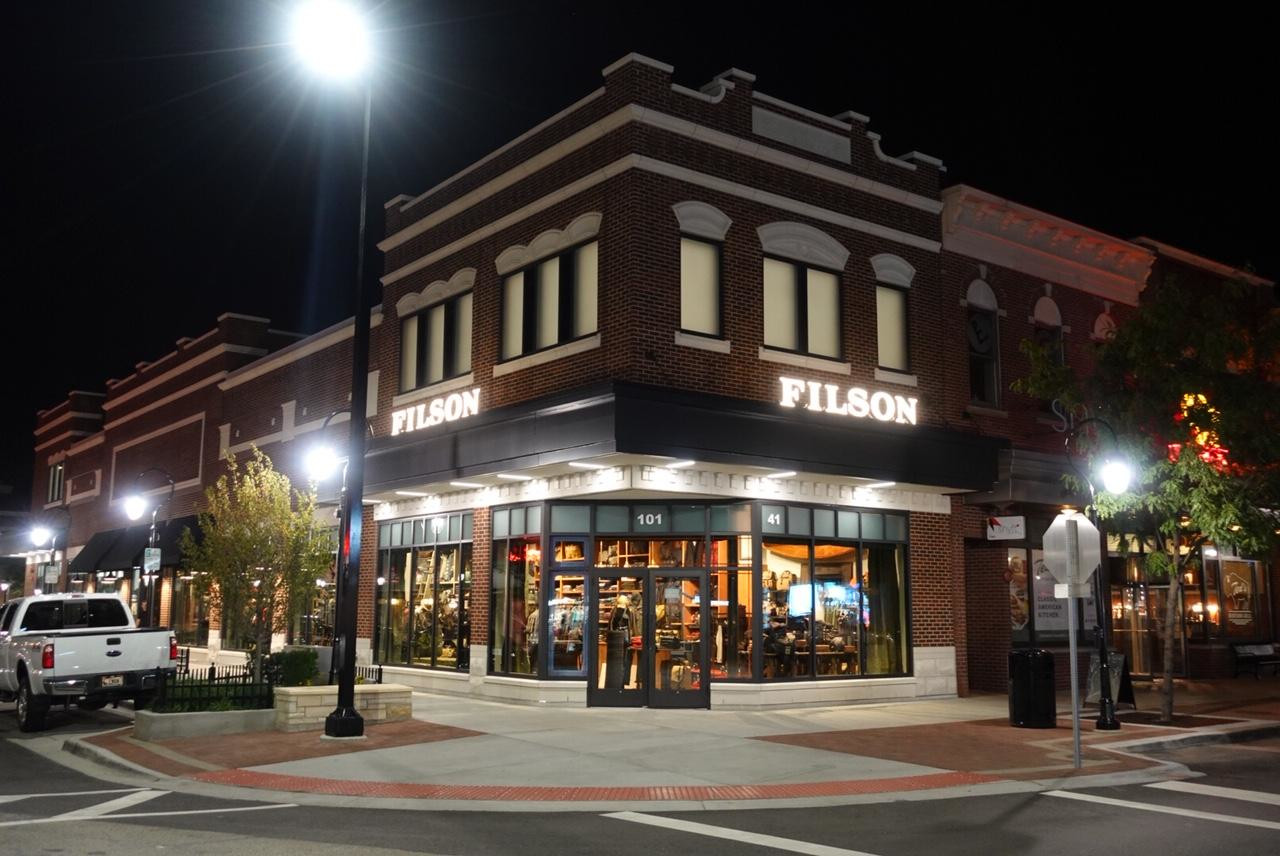 Project Profile: Filson Clothing Store
In downtown Naperville, 120-year-old mail-order-turned-eCommerce “manufacturer of goods for outdoor enthusiasts” Filson jumped at an opportunity to market their brand while adding to the vibrant fabric of a main-street-style historic shopping district. CVG Architects designed the new building at the prominent corner of Main Street and Jefferson Avenue, which replaced a circa-1890 structure that had been demolished in 2017. Respecting the owner’s intent for the property, the new building was contextually designed to reinforce the historic Jefferson Avenue streetscape, while providing a welcoming presence at the intersection, and an ideal home for a contemporary retail environment. The use of face-brick, precast accents, large storefront windows, and an articulated parapet contributed to the integrity of the design, honoring Naperville’s unique existing downtown streetscape. Of note, within Filson’s new store, curtains and cushions were sourced from half-shelters used during World War II, further contributing to the historic feel of the development.
As a third and final trend worth examining in this discussion of how bricks and mortar retailers are evolving in the eCommerce age, we look toward one major player in the history of bricks and mortar retail that has begun to re-invent itself – again: the shopping mall. Absolunet, a marketing agency that helps eCommerce clients “bridge the gap between how they sell and what customers expect in the digital economy,” recently published their 10 eCommerce Trends 2020 report which highlights a growing phenomenon: the comeback of the suburban shopping mall.
During the Great Recession of the late 2000’s, existing suburban shopping malls dealt with a wave of anchor store bankruptcies and the subsequent failure of smaller tenants that relied on anchor stores for foot traffic. These circumstances, inevitably, led to mass closures of shopping malls across the U.S. Soon thereafter, savvy developers saw an opportunity to creatively repurpose these abandoned malls to house everything from technology company headquarters/call centers and churches to mixed-use developments, skating rinks, and college facilities.
The shopping malls that somehow survived these changes continue to face high vacancy rates and the ongoing need to attract high-quality tenants and shoppers. Owners of shopping malls are now seeing value in “refreshing” exterior facades and architectural elements to replace dated aesthetics, while also upgrading amenities, diversifying tenants, and enhancing shopper experiences, contributing to the broad revival – or reinvention – of the shopping mall.
Some mall developers are leveraging vacancies as a chance to offer exclusivity and newness with pop-up opportunities and short-term retail strategies within a revitalized retail landscape. This approach minimizes risk by enabling brands to test the market and location before committing to long-term leases. Other malls are being completely transformed into work-live-play environments or are being reborn as city centers. Regardless of level of investment, most shopping mall owners today are working to reinvent their image, understanding that successful malls must re-emerge as destinations that cater to the needs of modern consumers who have many options when it comes to shopping.
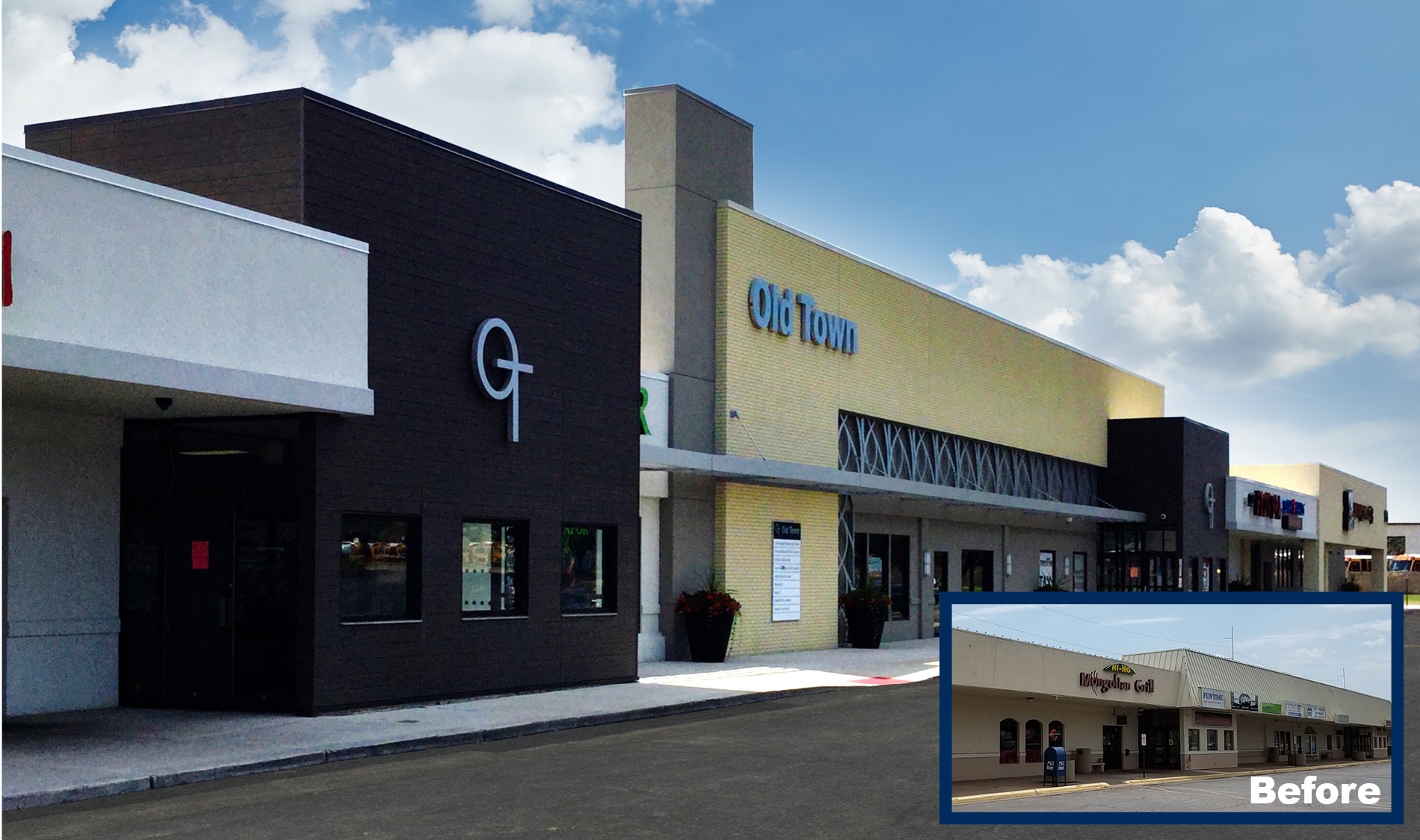
Project Profile: Davenport Old Town Mall
The family-owned Old Town Mall in Davenport, Iowa was recently revitalized through design enhancements by CVG Architects – responding to a new generation of ownership and a desire to maintain the mall’s viability within a competitive retail landscape. The dated facility included both an interior ring mall, and in-line stores facing a major thoroughfare. The owners were looking to update the mall’s overall aesthetic to align with modern design trends. CVG Architects transformed the facility into a visual landmark by designing a main building element, anchored at each end by two entrances to the internal mall, to result in central focal point with flanking, identifiable building masses. A brand-new façade and accentuated entrances to the inner mall were achieved through use of cost-effective materials with a high-end look, including stucco, faux brick in complementary colors, and faux wood paneling. Height changes along the façade were implemented to add interest and draw attention toward the inner mall. CVG Architects also designed a custom Old Town Mall Logo to assist in the creation of a new identity for the revitalized mall, which is now commanding higher rents and has reduced vacancies.
These are just a few examples of how eCommerce is impacting bricks and mortar retail – influencing trends and creating longer-term opportunities. With consumer needs at the core of these trends and opportunities, retailers who can build relationships with consumers and deeply understand how their needs have evolved based on the growth of eCommerce, are positioning themselves to survive, and thrive, in the bricks and mortar retail environment. In addition, successful partnerships between retailers, developers, and designers are resulting in a new wave of retail environments that allow consumers to interact with their favorite brands in unexpected ways within highly interactive and seamless shopping environments that feature much more than just a product on display.
Contact our Retail Services Architecture and Design experts directly for more information or to schedule a meeting: