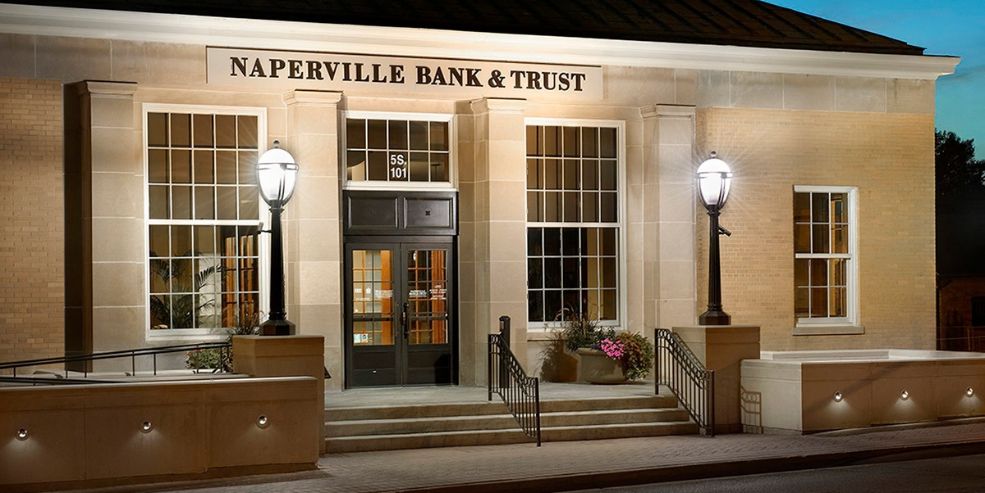
Security has always been fundamental to retail banking. What has changed is the context. Branches are smaller, more transparent, and more integrated into everyday environments, from urban storefronts to community hubs. At the same time, banks continue to handle sensitive financial information, cash, and valuables. The challenge today is not simply protecting assets, but doing so in a way that supports employee confidence and preserves a welcoming, private experience for customers.
Charles Vincent George Architects has partnered with a broad range of retail banking clients on projects of diverse scopes and sizes to navigate this balance. Our work focuses on aligning security, privacy, and confidentiality with thoughtful design choices that feel intentional rather than defensive. The result is architecture that supports how people actually use banks, without sacrificing safety or trust.
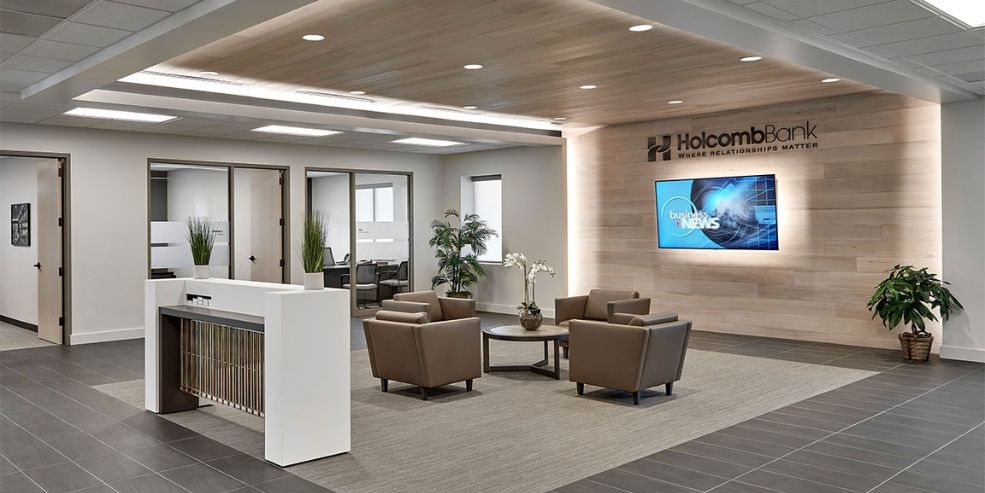
Security in a bank is never one-dimensional. Employees need to feel protected when handling cash, receiving coin deliveries, or accessing secured areas. In many modern branches, especially urban storefronts with extensive glazing, there is also the concern of passersby being able to see computer screens or observe sensitive transactions. These considerations influence everything from workstation placement to interior zoning.
For customers, safety is important, but privacy is paramount. Sharing confidential financial information requires a sense of discretion and calm. Historically, this was easier to achieve in larger branches with multiple enclosed offices. Today’s smaller footprints must deliver the same level of service and confidentiality in far less space. Creative design becomes the primary tool for achieving that balance.
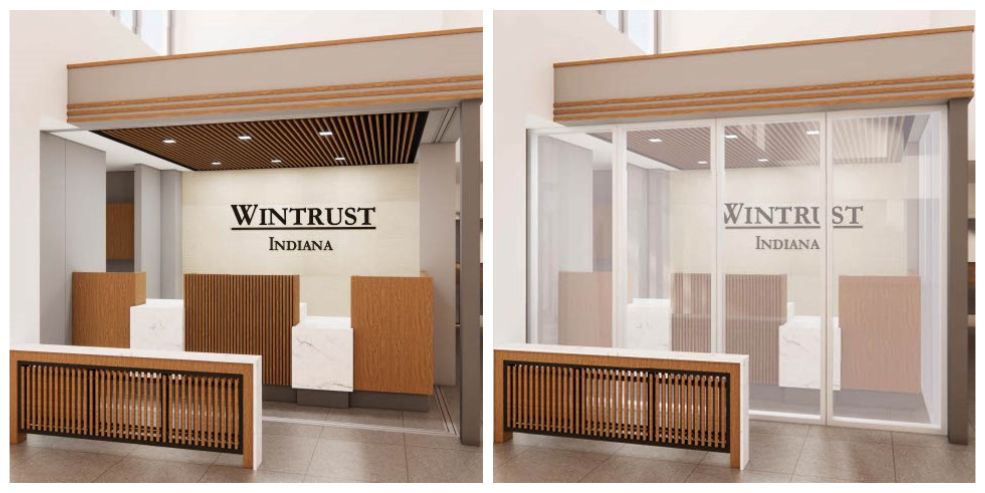
When a bank operates within a larger facility or shared-use building, flexibility becomes essential. A small retail outpost for Wintrust inside a YMCA illustrates this well. Extended building hours required a clear distinction between when the bank was open and when it was secure, without closing it off entirely. Frosted glass walls that retract during operating hours and rise after closing provide visibility and presence while still signaling security. The solution allows people to know a bank exists in the space without leaving it visually or physically exposed.
In ground-up projects, transparency can also support efficiency. At Wintrust Bank in Montgomery, IL, the building houses both retail banking and commercial services. These functions are distinct, yet interconnected. Shared conference rooms, corridors, and restrooms are centrally located and can be securely blocked off when needed. This “middle-market” model allows the building to operate efficiently while maintaining appropriate separation between public and higher-security areas..jpg)
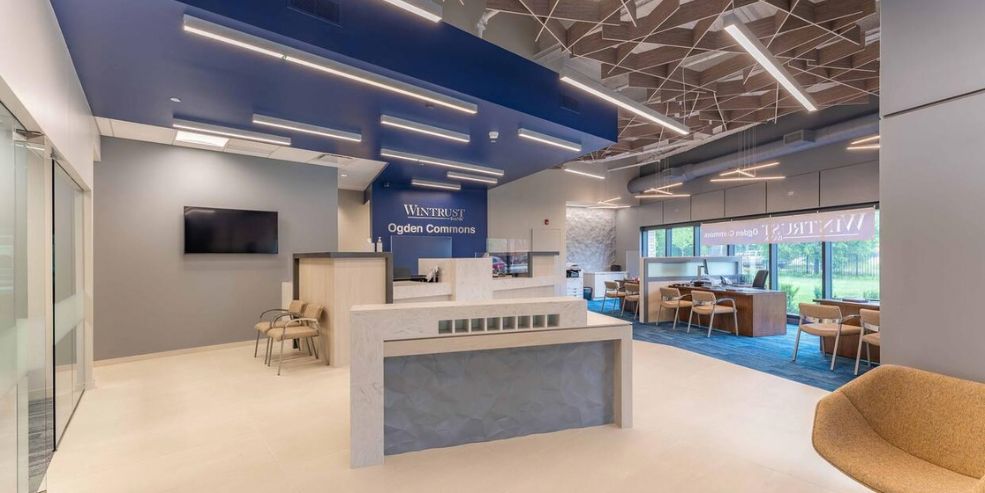
A welcoming environment does not mean removing structure. In fact, intentional placement of core banking elements can significantly enhance both comfort and security. Tellers and transaction points are often set back from entrances, creating a natural buffer and allowing staff to observe arrivals without feeling exposed. Relationship bankers are positioned so they can easily greet customers, but with subtle barriers that prevent the sensation of standing in the middle of a busy thoroughfare.
Design elements such as welcome walls, coffee stations, and digital displays serve a dual purpose. They provide meaningful distractions in reception areas and help shift attention away from active consultations. Comfortable seating areas, counters with stools, and even residential touches like fireplaces create zones where customers can pause rather than queue. These areas are typically located near the entrance, ensuring customers know where to go without searching, while still allowing staff to manage flow and visibility.
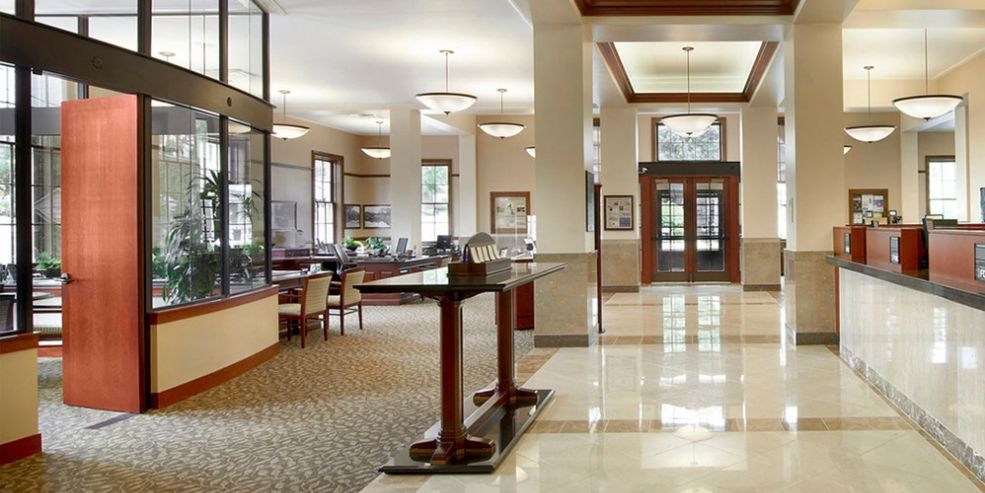
A well-considered floor plan naturally leads customers from public areas to more private or secure zones. This guidance often relies on understated design cues rather than signage alone. Changes in floor finishes, shifts in lighting intensity, and strategic placement of relationship bankers help orient visitors as they move through the space.
Transaction areas remain clear destinations. They should stand out through contrast, using distinct materials or color palettes so they do not blend into the background. This clarity reduces customer uncertainty and reinforces a sense of order and control, both of which contribute to perceived security.
.jpg)
Some of the most effective security features are those that do not read as security at all. At Wintrust Lincoln Park, a small urban storefront branch, limited square footage required very focused decisions. A wood-slatted division wall separates the reception area from banker workspaces. Visually, it feels modern and warm. Functionally, it provides comfortable separation and controlled visibility so relationship bankers and their customers don’t feel exposed to the reception area.
Vault areas are another place where design plays a critical role. At Wauconda Community Bank, glass walls and custom railings provide transparency for staff monitoring while allowing customers to feel secure rather than confined. These spaces are treated as destinations, reinforcing their importance and purpose.
Material and color choices further support privacy. Brighter tones tend to define public zones, while darker, richer finishes signal more private areas. Soft materials, wall coverings, and appropriate ceiling treatments reduce sound reverberation, protecting conversations without relying solely on enclosed rooms.
Security in retail banking is ultimately about trust. Employees must feel confident in their environment, and customers must feel respected and protected. Thoughtful architectural design makes that balance possible. By integrating security into the experience rather than layering it on afterward, CVG helps banks create spaces that are open, efficient, and reassuring, places where protection and hospitality coexist naturally.