

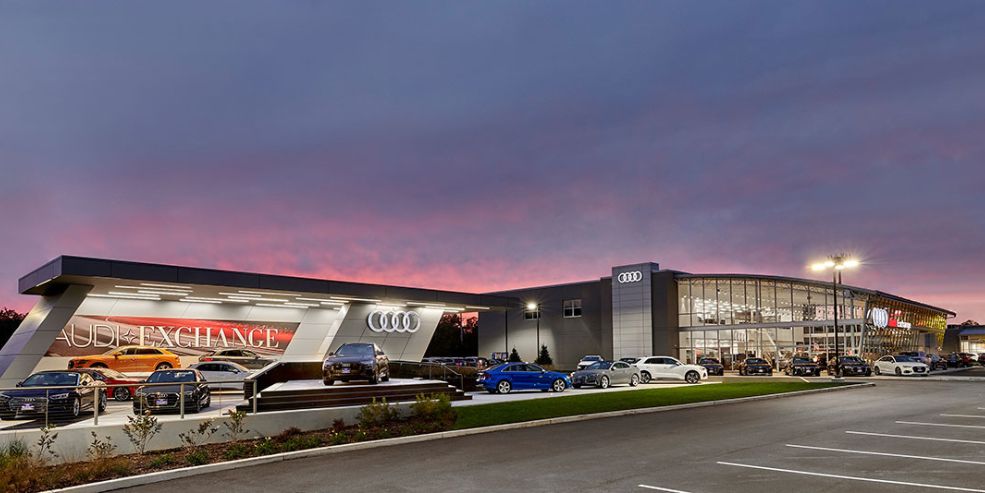
Car dealerships are among the most multifunctional project types in retail design. They combine indoor and outdoor environments, blending the aesthetics of a showroom with the technical precision of a service center. Within a single property, customers might browse a vehicle lineup, discuss financing options, wait for maintenance, or simply enjoy a coffee while their car is serviced. Each of these moments shapes how a customer perceives the brand and, ultimately, whether they return.
At Charles Vincent George (CVG) Architects, we view dealership design as a complete customer journey. From the first glimpse of the building from the street to the experience of waiting for a vehicle’s service, every touchpoint offers an opportunity to engage, orient, and delight. Here’s how we approach dealership design from the outside in.
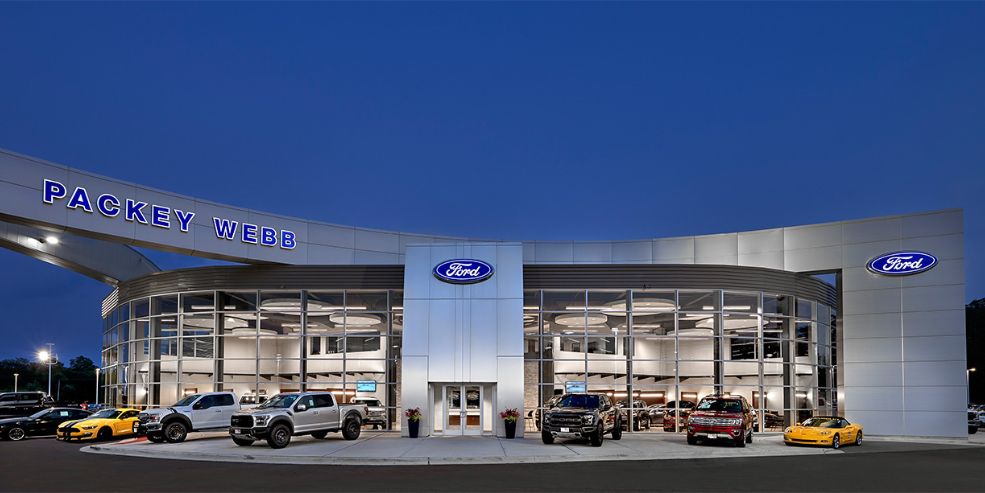
While many automotive brands have rigorous architectural and branding standards, there’s still room to create distinctive site experiences. The goal is to capture attention, but also to make the dealership’s outdoor spaces functional and inviting — an environment that encourages browsing rather than just parking.
At Audi Highland Park, we transformed a typical forecourt into an outdoor plaza. Instead of the typical static lineup of cars, the site features walkable platforms and interactive zones, encouraging customers to move through the space. This creates a sense of engagement from the moment of arrival.
Similarly, Packey Webb Ford redefines what a traditional Ford dealership can look like. Carefully designed lighting and custom paving break up large expanses, while a prominent architectural feature, brightly illuminated at night, anchors the building as a recognizable local landmark.
Even on tighter sites, design can enhance the visitor experience. At Audi Kirkwood, where space and municipal requirements were limiting, subtle but thoughtful interventions like ornamental railings, strategic lighting, and lush landscaping add sophistication and warmth. The result is a dealership that feels deliberate and refined rather than constrained.
Thoughtful design choices like these shape how customers feel when they visit: calm, confident, and welcomed. A dealership’s first impression sets the tone for the entire experience, and every design detail contributes to that initial sense of comfort and trust.
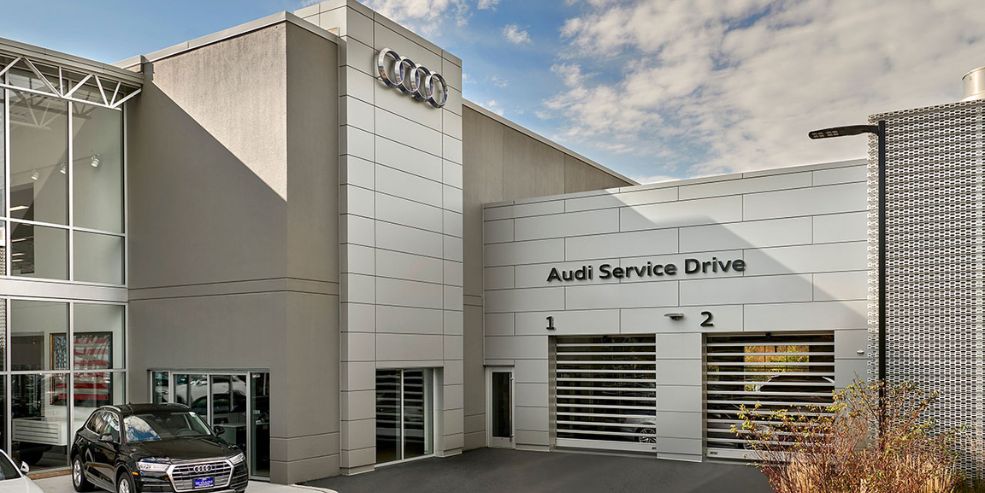
Dealerships can be more complex than meets the eye. There are multiple destinations within a single site — sales, service, parts, and customer amenities — and visitors must move between them seamlessly. A good design makes this movement effortless and intuitive, reducing stress and confusion from the start.
Our approach begins with site organization. Entrances should feel obvious without excessive signage. Where signage is used, it should reinforce rather than compensate for architectural clarity. For instance, Audi Highland Park sits on a deep property with numerous display areas. Clear wayfinding elements and thoughtfully positioned entrances ensure that customers always know where to go, whether for sales or service.
At Packey Webb Ford, pedestrian display paths guide customers naturally toward the showroom. These paths not only simplify circulation but also encourage a more relaxed browsing experience. And because climate often shapes the indoor-outdoor relationship, our designs adapt accordingly: open-air pathways and outdoor lounges are ideal in warmer climates, while covered entries and vestibules enhance comfort in colder regions.
Ultimately, a dealership should feel navigable and human-scaled, even when its footprint is large.
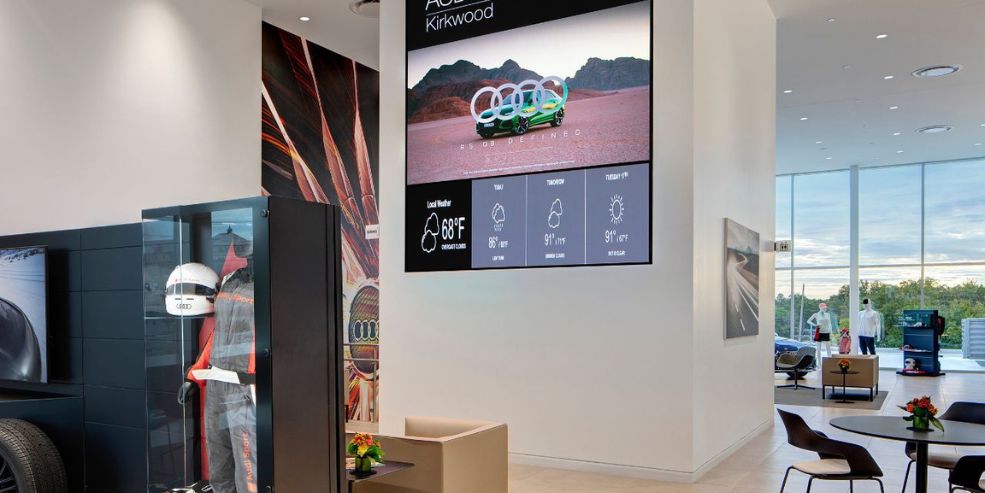
Each dealership we design embodies a brand, but not in a purely visual way. The best expressions of brand identity go beyond signage and color palettes to shape atmosphere, rhythm, and even community connection.
Take Audi Kirkwood, for example. Its two-story showroom features a striking video wall visible from outside the building. The display runs branded visuals and community-based content, drawing attention day and night. Importantly, the dealership also uses this space to host events for local charities and organizations, reflecting both the Audi brand’s sophistication and the dealer’s civic engagement.
When a dealership feels authentically tied to its community, it becomes more than a point of sale. It becomes a local landmark, a familiar and trusted destination.
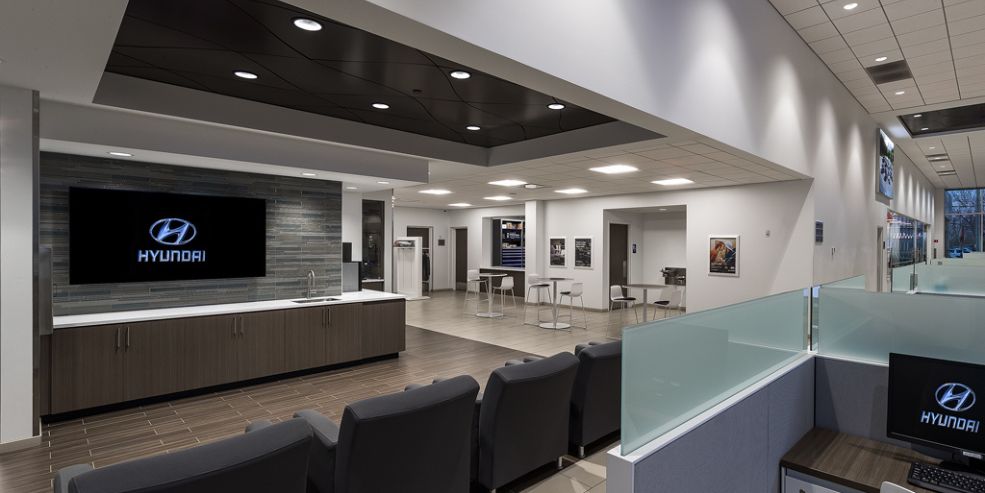
Car buying and servicing can be long, sometimes tedious experiences. We believe good design can transform that downtime into something enjoyable, or at least relaxing.
Inside the showroom, we focus on creating layered environments that balance privacy and openness. At Audi Kirkwood and Audi St. Charles, standard sales desks coexist with soft-seating “living rooms.” These comfortable zones serve dual purposes: customers can meet with sales staff in a more casual setting or wait for their service appointment in comfort.
Similarly, at Hyundai of Palatine, a newly renovated lounge offers comfortable places to relax, with café tables and a large television that help make wait times more enjoyable. At Fields BMW Northfield, bright, modern lounge areas pair café-style seating with soft lounge furniture and complimentary refreshments. Centrally located within the facility, the space keeps customers close to the showroom and sales staff while still giving them room to unwind.
These spaces don’t just make customers more comfortable; they make the brand more memorable.
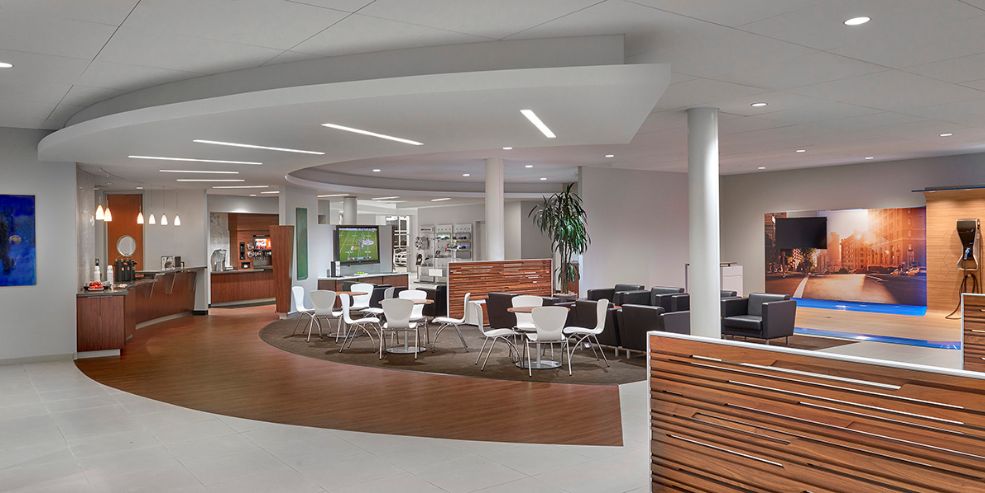
Across all our automotive projects, one principle remains constant: every design decision impacts how a customer feels. From the moment they turn into the lot to the moment they drive away, their experience is shaped by sightlines, pathways, comfort, and care.
We’ve seen firsthand how a well-considered dealership can elevate both brand and customer satisfaction. The feedback we receive from clients and their customers reinforces this truth: people remember spaces that welcome them.
When design supports every step of the customer journey, from curb appeal to comfort, it does more than simply sell cars. It builds trust, community, and loyalty that last long after the keys are handed over.
.jpg)
